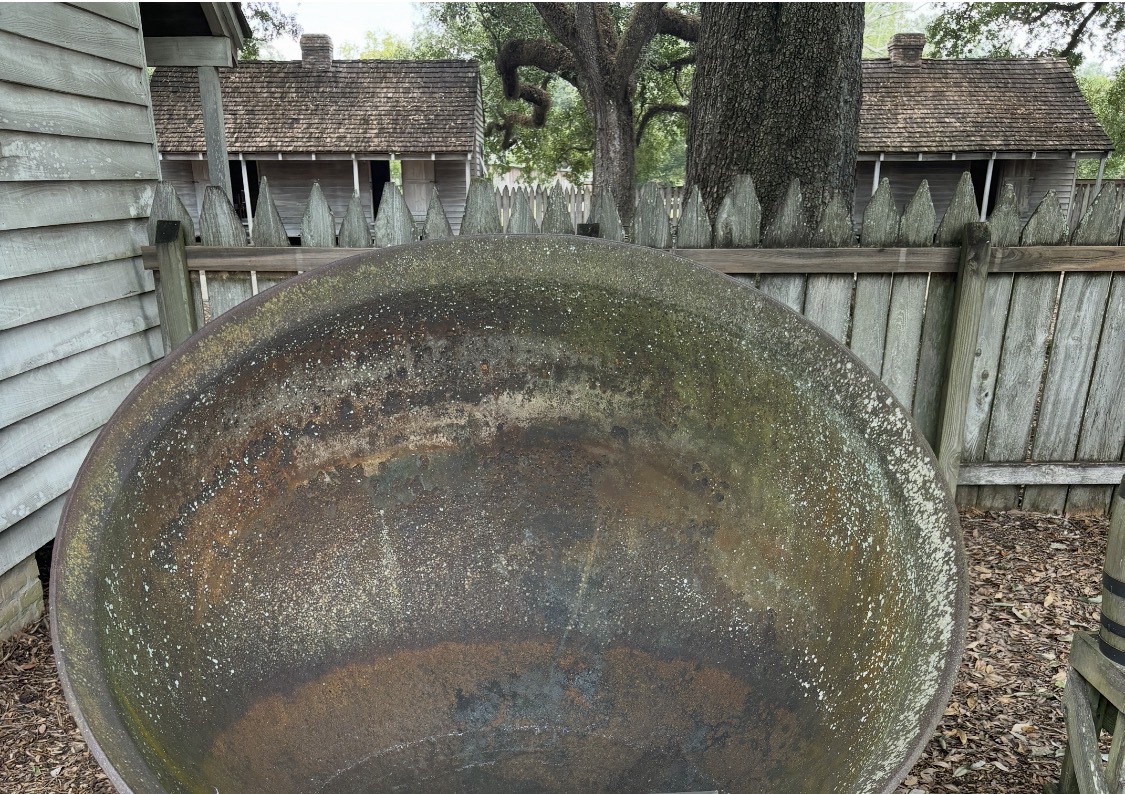
Laundry kettles were extremely large, heavy containers, similar in size to those used in sugar production. Although they could be used for multiple purposes, plantations typically kept permanent kettles and tubs set up near kitchens or work areas. Enslaved people were responsible for tending open fires beneath the kettles while being closely supervised by the plantation mistress. Historical photographs show enslaved children working with these kettles.
Soap-making, done using lye, was especially dangerous. Lye was produced by pouring boiling water through ashes, creating a corrosive liquid that was collected and tested for strength. Once strong enough, animal fat was added to make soap. Regular use of this homemade soap caused chemical burns on the hands and arms of enslaved people, leaving lasting marks that identified them as washerwomen.


Leave a Reply